Flat Roof Solar Mounting Systems — The Anchor Plate Range

Mechanical flat roof solar fixings engineered for warm and conventional roof constructions. Factory pre-tensioned, membrane-compatible, and built to last the life of the installation.

The Problem With Flat Roof Solar Fixing

Flat roof solar installations demand more from a fixing than pitched roof work.

The membrane has to stay watertight. The thermal performance of the roof build-up has to stay intact. And every penetration point is a potential failure point that an installer will be held accountable for, sometimes years after the job is complete.

Most mechanical fixing solutions treat the seal as a secondary consideration. The Anchor Plate range was built around it.

Introducing the Anchor Plate System

The Anchor Plate is a precision-engineered mechanical mounting system for flat roof solar installations on conventional and warm roof constructions.

The system is available in two variants — the Anchor Plate Mark 1 for existing roofs and retrofits, and the Anchor Plate Mark 2 for new build and new roof installations.

Both use the same core engineering. The difference is in how and when they integrate with the roof.

Mark 1 and Mark 2 — Which Is Right for the Job?

If the roof is already down, specify the Mark 1. If the roof is going down new, specify the Mark 2.

 Anchor Plate Mark 1Anchor Plate Mark 2
Primary applicationRetrofit and existing roofsNew build and new roof installations
Installation positionSurface-mounted over membraneIntegrated beneath membrane layer
Membrane applicationWork around fixing pointSingle pass over entire deck
Joints per anchorMultiple dressed jointsSingle clean penetration
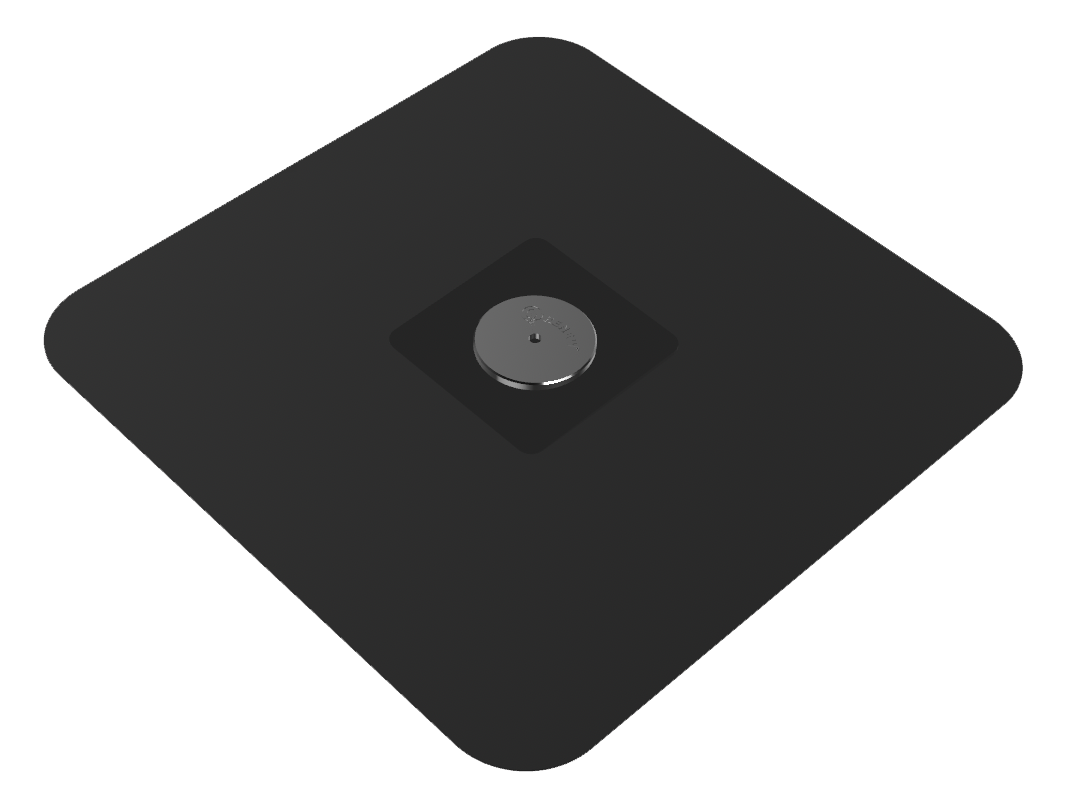
Base plate dimensions450 x 450mm450 x 450mm
AssemblyFactory pre-tensionedFactory pre-tensioned

Anchor Plate Mark 1 — Flat Roof Solar Fixing for Existing Roofs

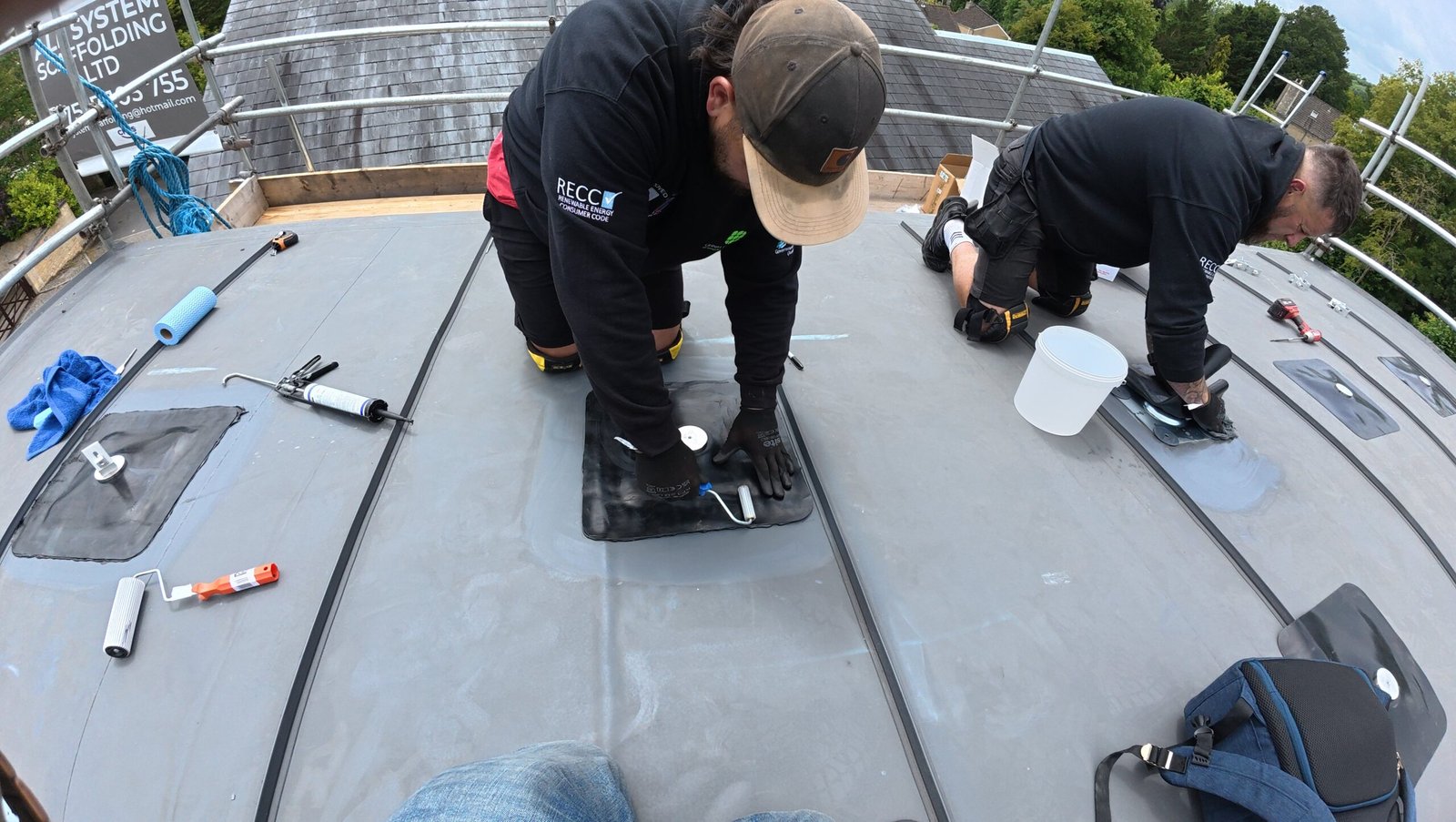
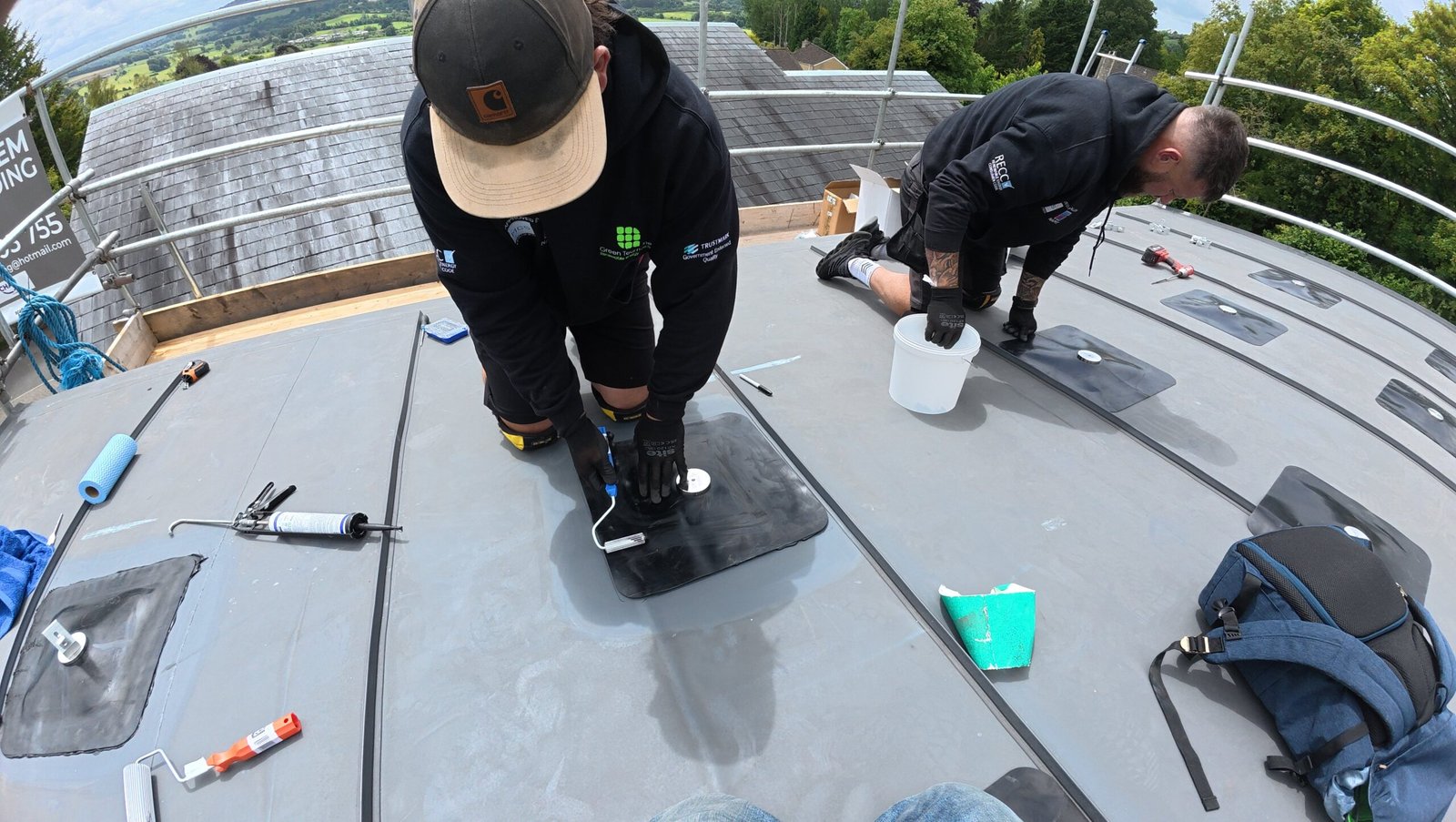
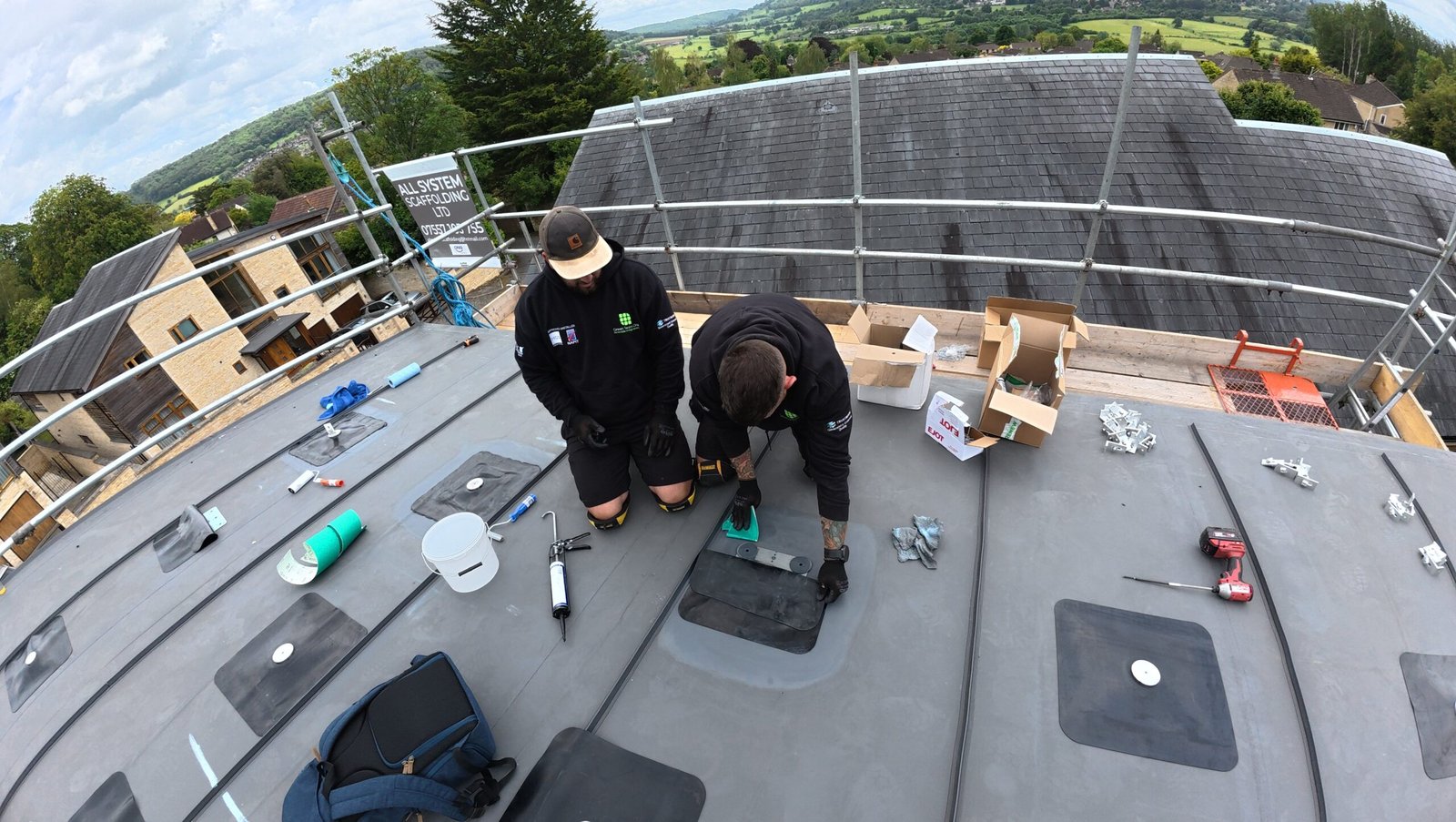
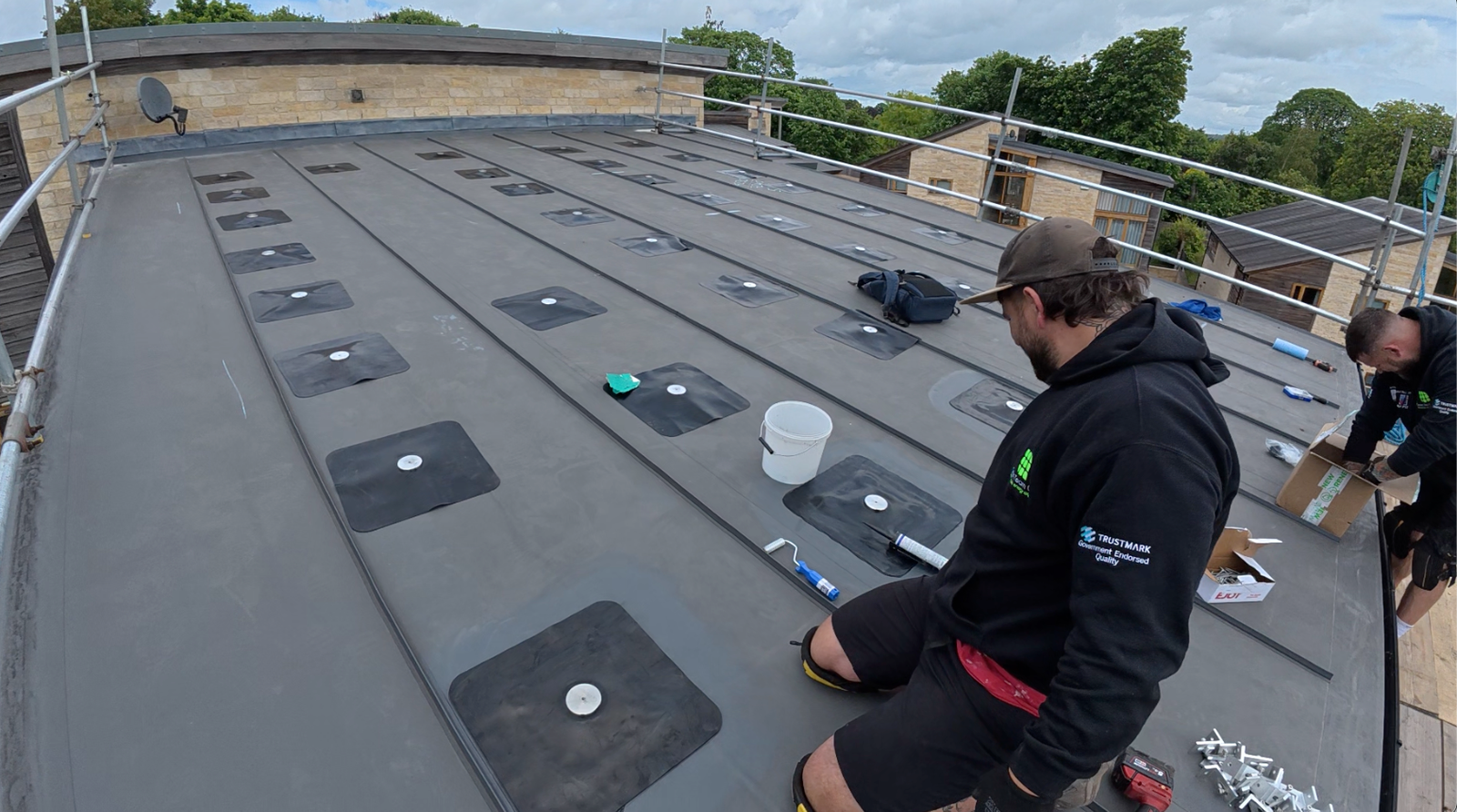
The Mark 1 is a surface-mounted mechanical fixing designed to perform on roofs that are already in place.

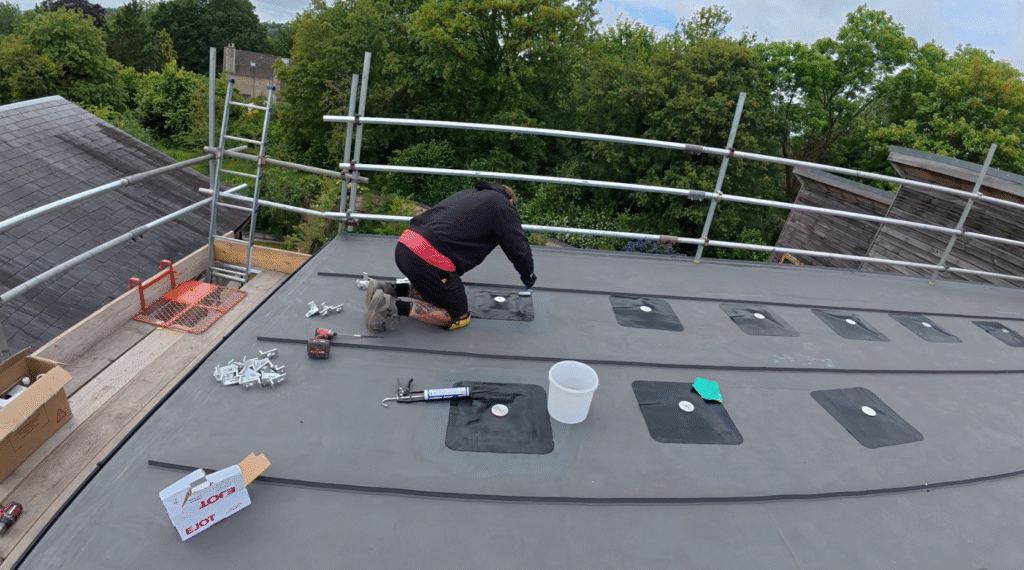
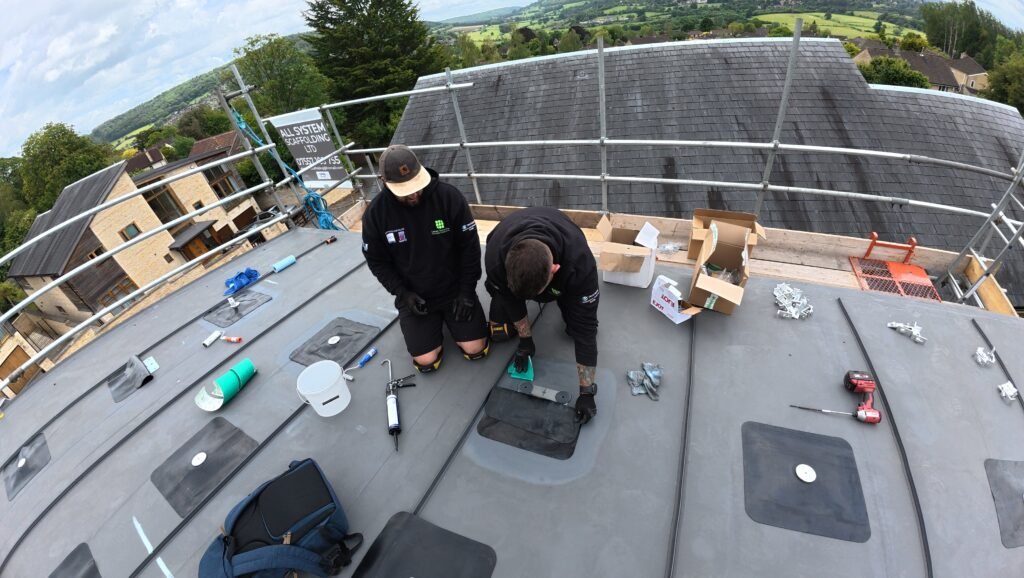
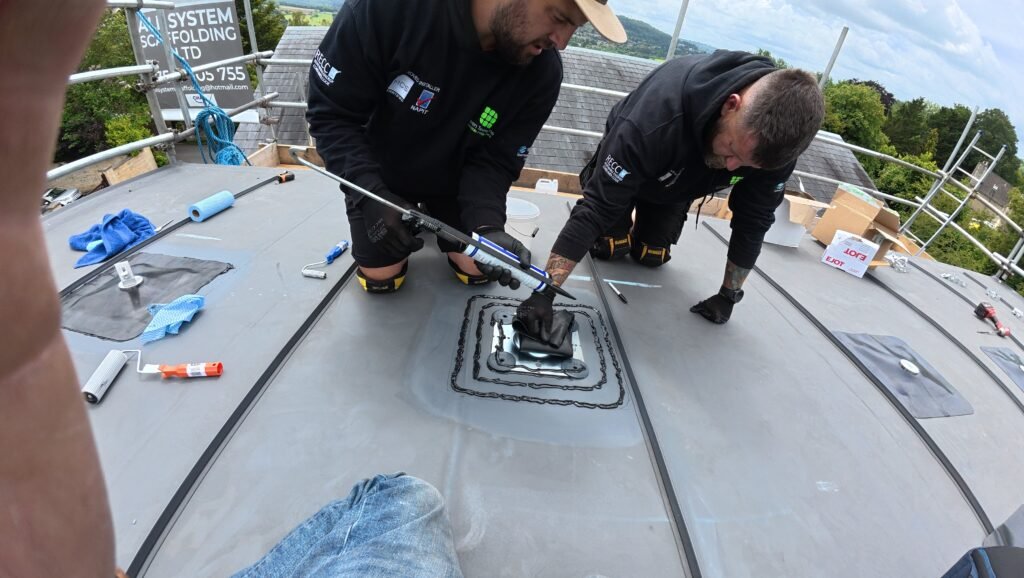
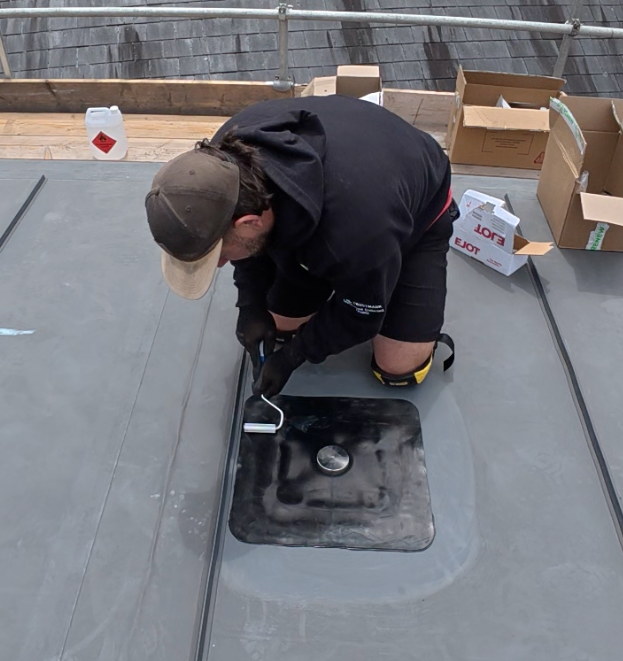
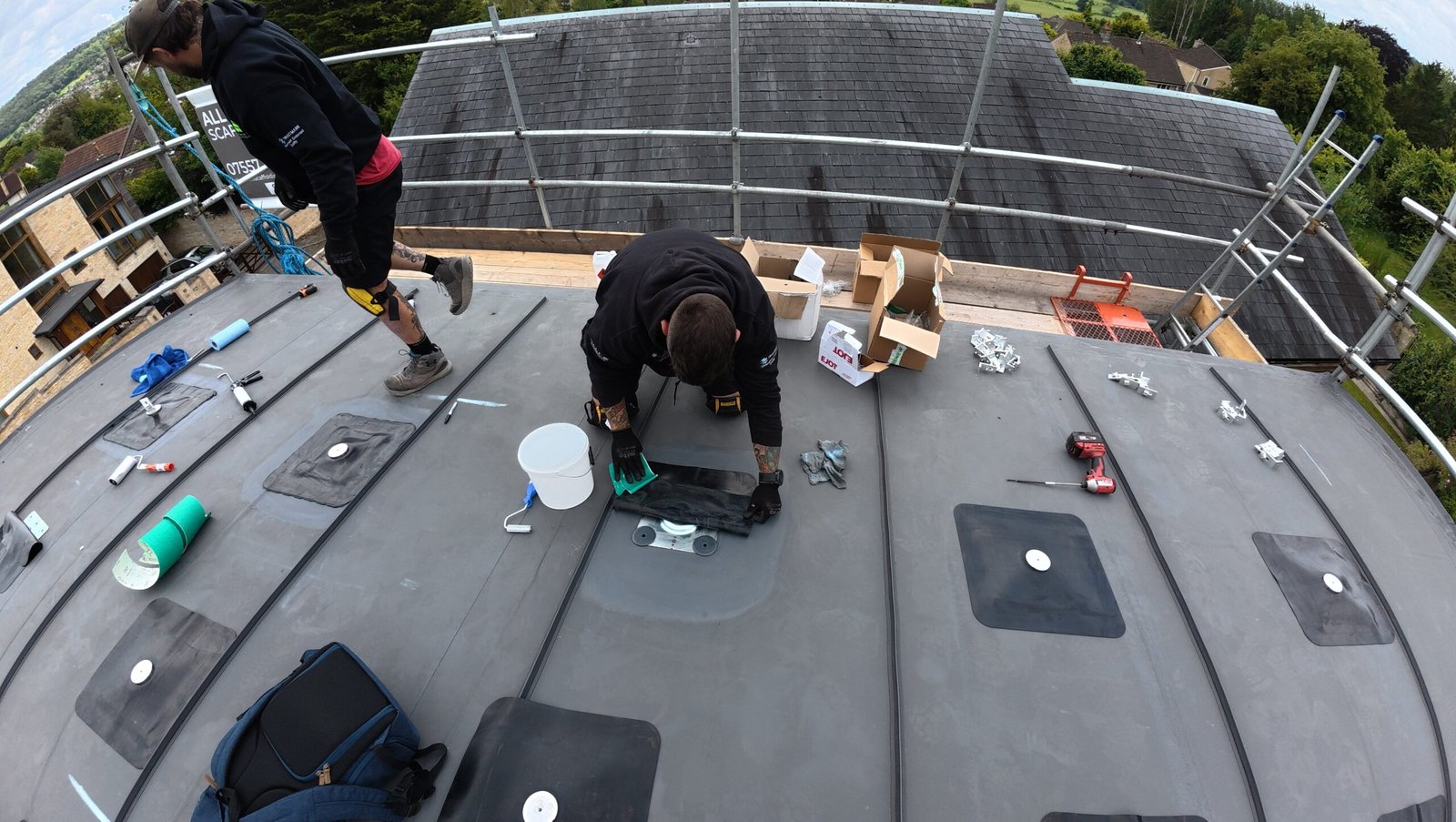
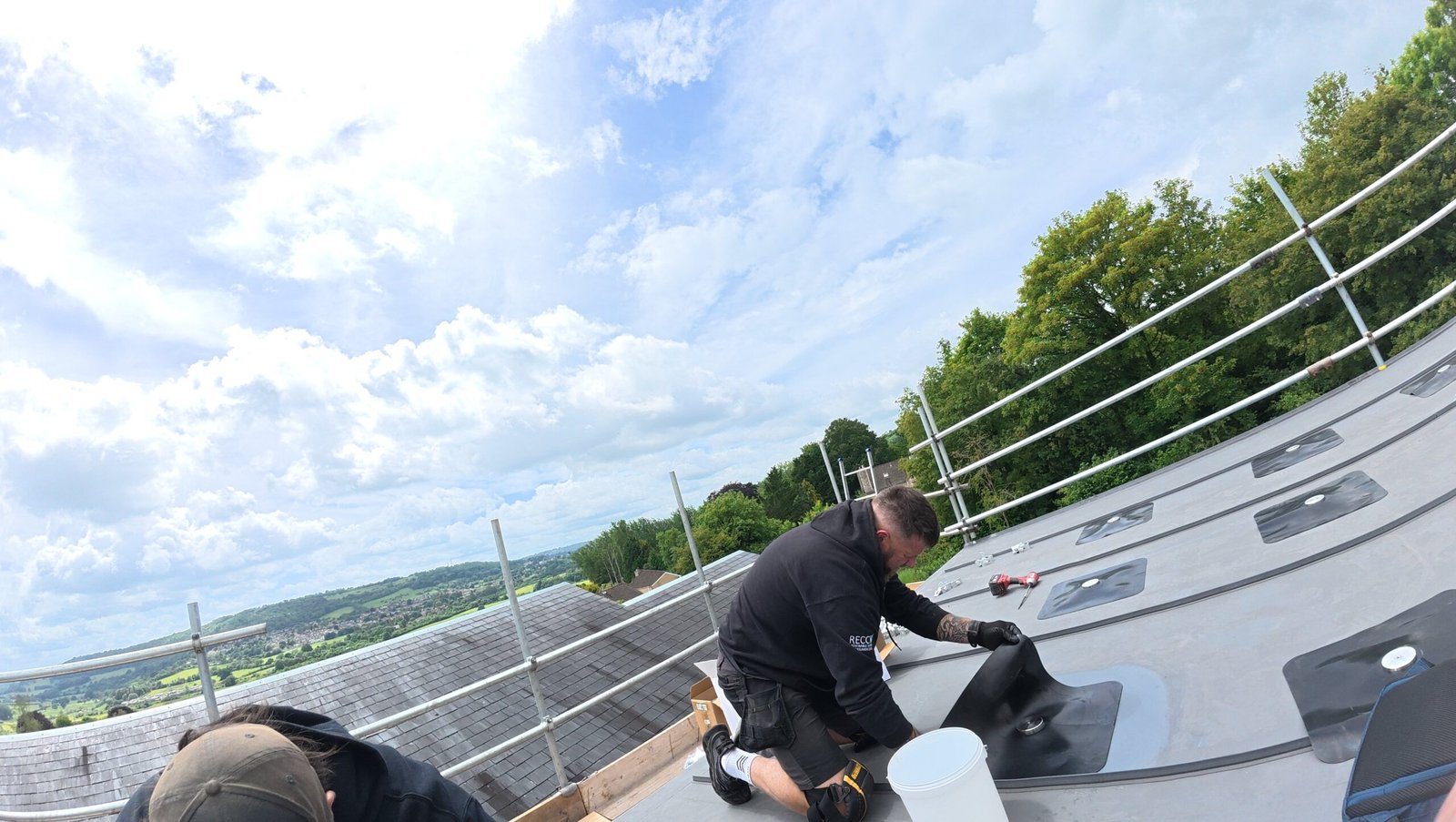
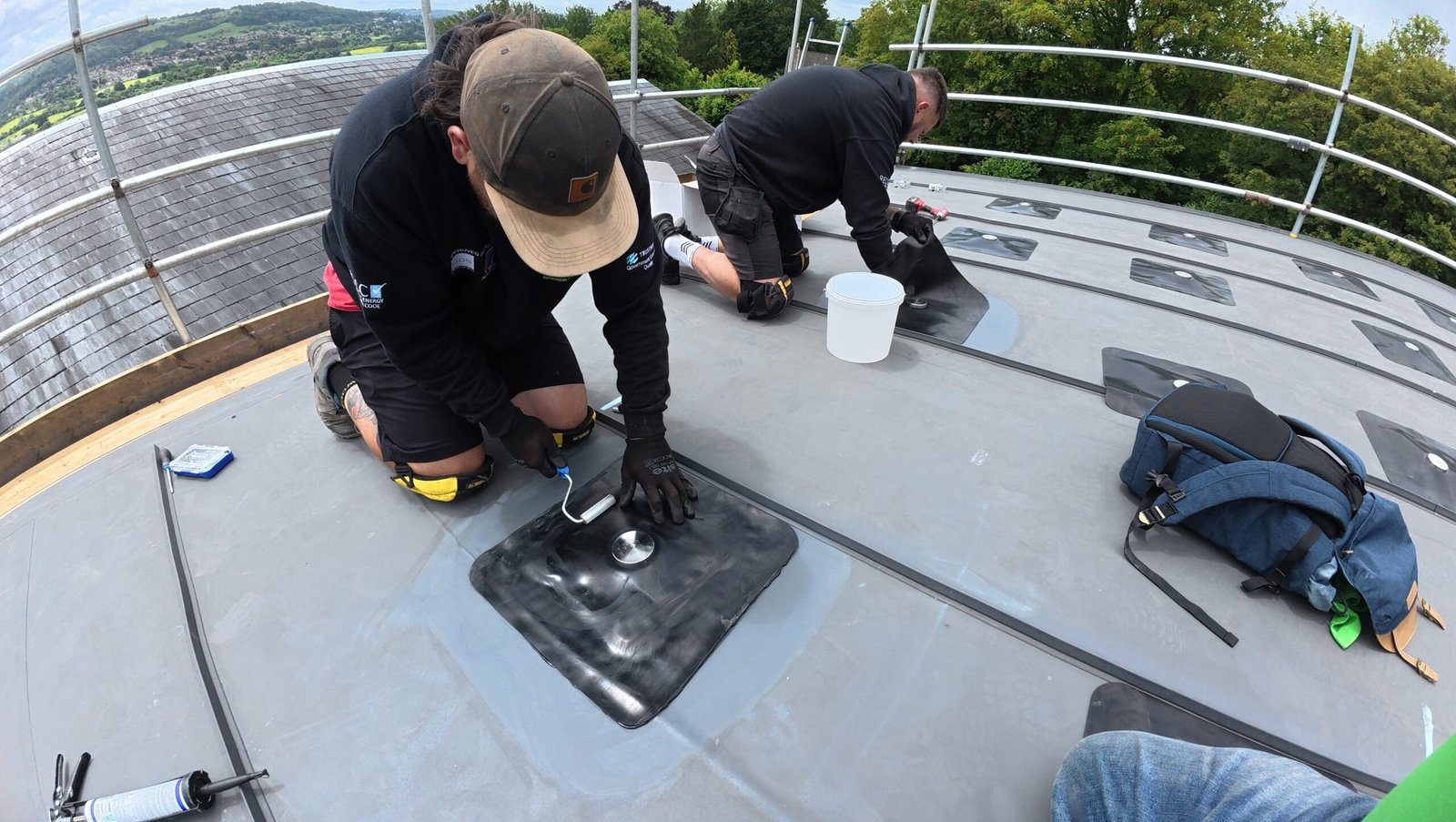
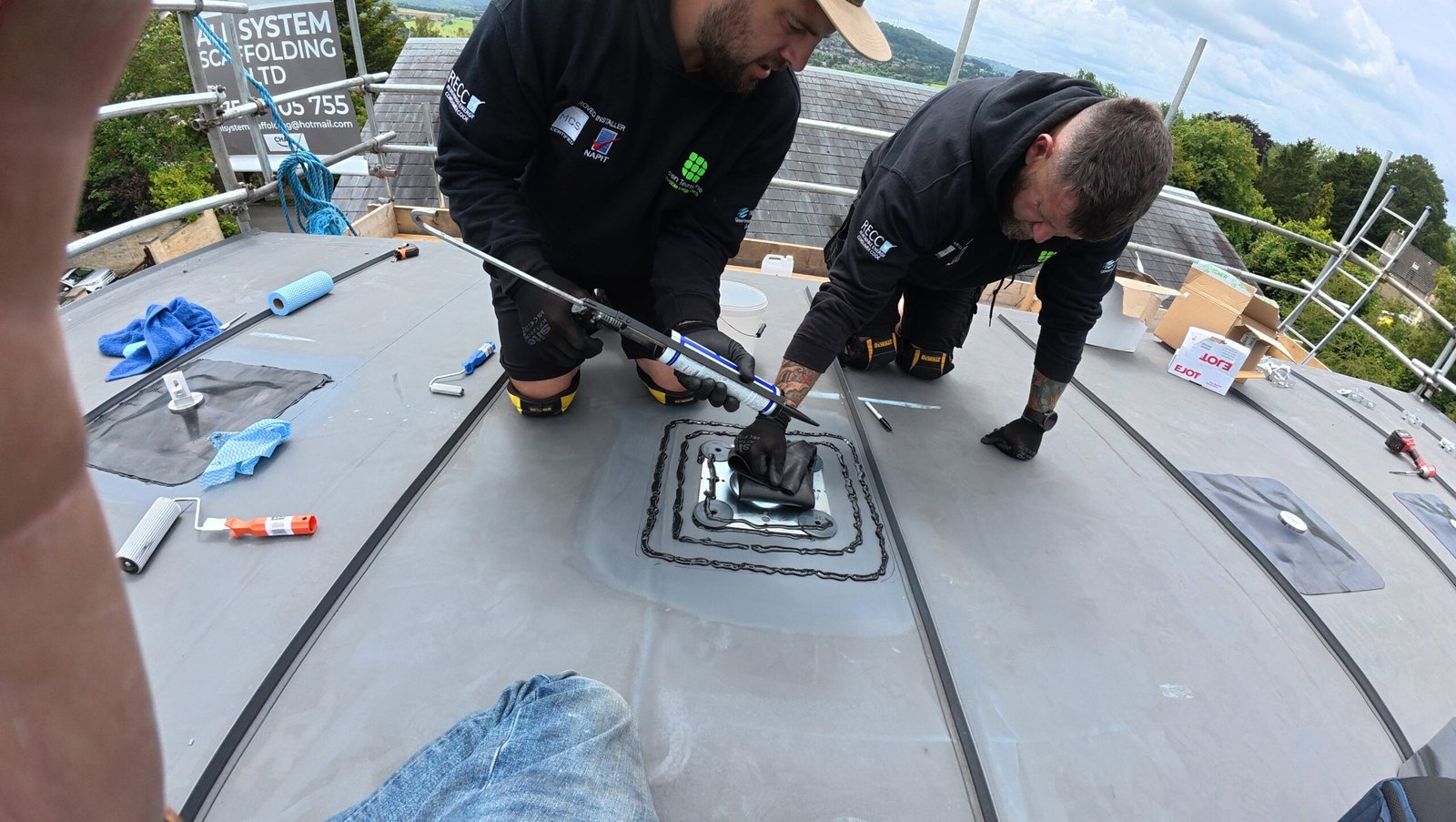
It sits on top of the membrane and fixes down through it into the substrate below. The factory-assembled EPDM rubber sealing system creates a complete environmental barrier at the penetration point without relying on site-applied sealants or tapes.

Compatible with the full range of flat roof membrane types used across UK commercial and domestic construction.

The Mark 1’s defining engineering detail is the internal bore seal mechanism built into the mounting bolt.

Rather than relying on a surface gasket alone, the bolt incorporates an internal bore that creates a sealed pathway through the fixing. Water has no route through the penetration point regardless of the condition of the surrounding membrane.

It is a more robust solution than any externally-applied seal, and it arrives ready to install.

Anchor Plate Mark 2 — Flat Roof Solar Fixing for New Builds

The Mark 2 takes the same core engineering as the Mark 1 and applies it to a fundamentally different installation sequence.

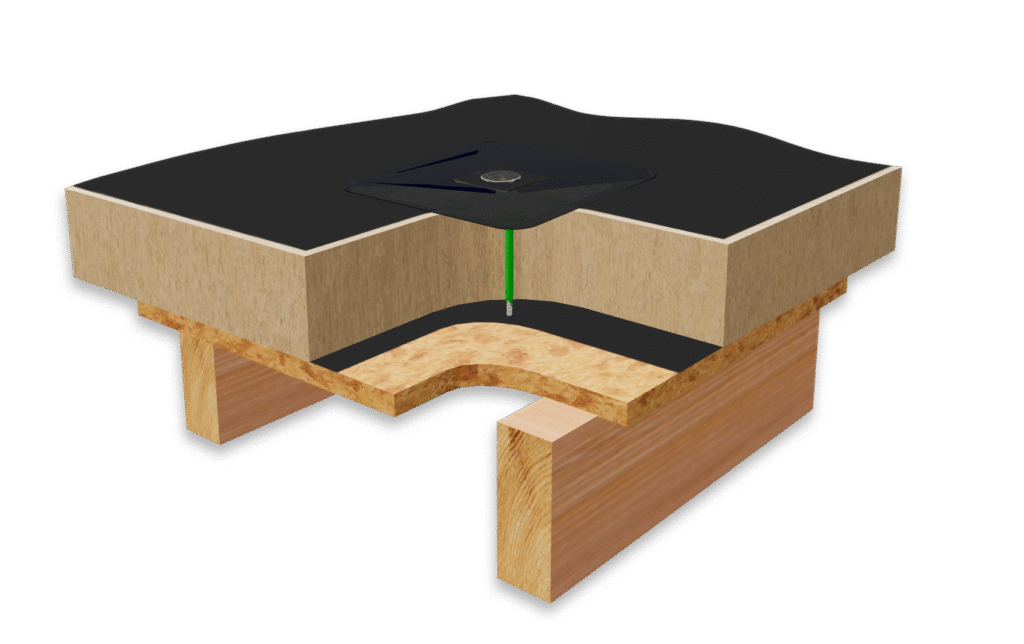
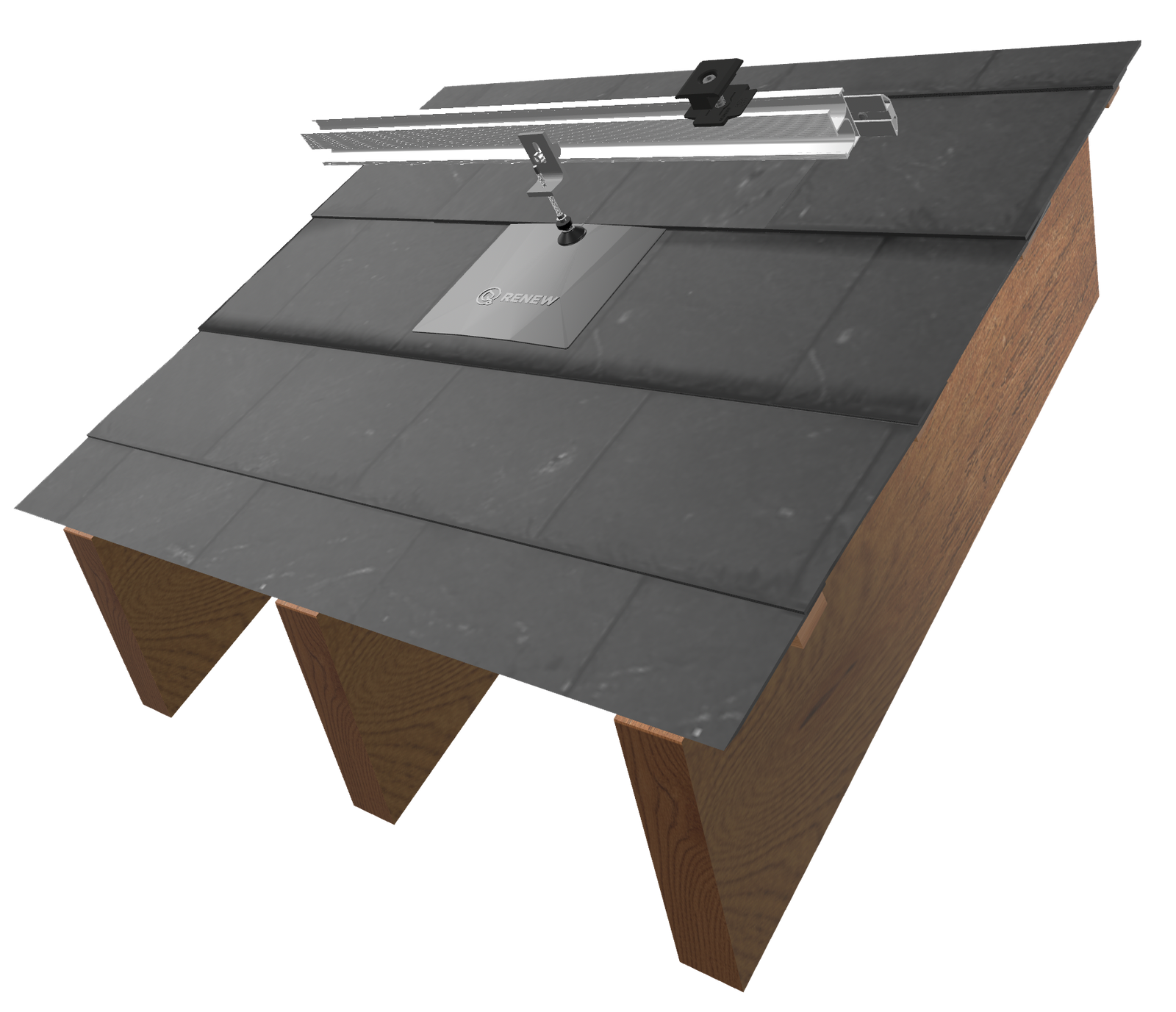
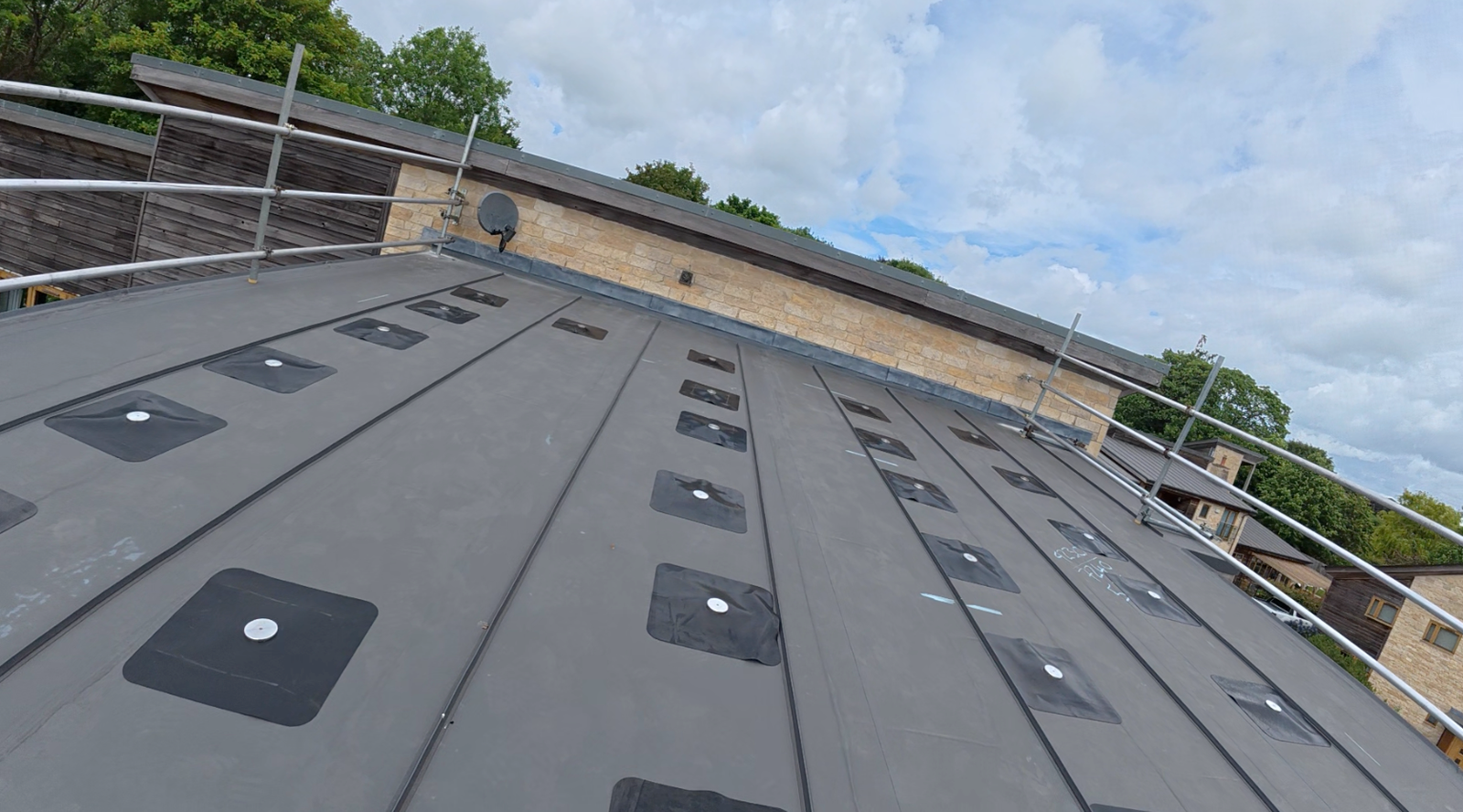
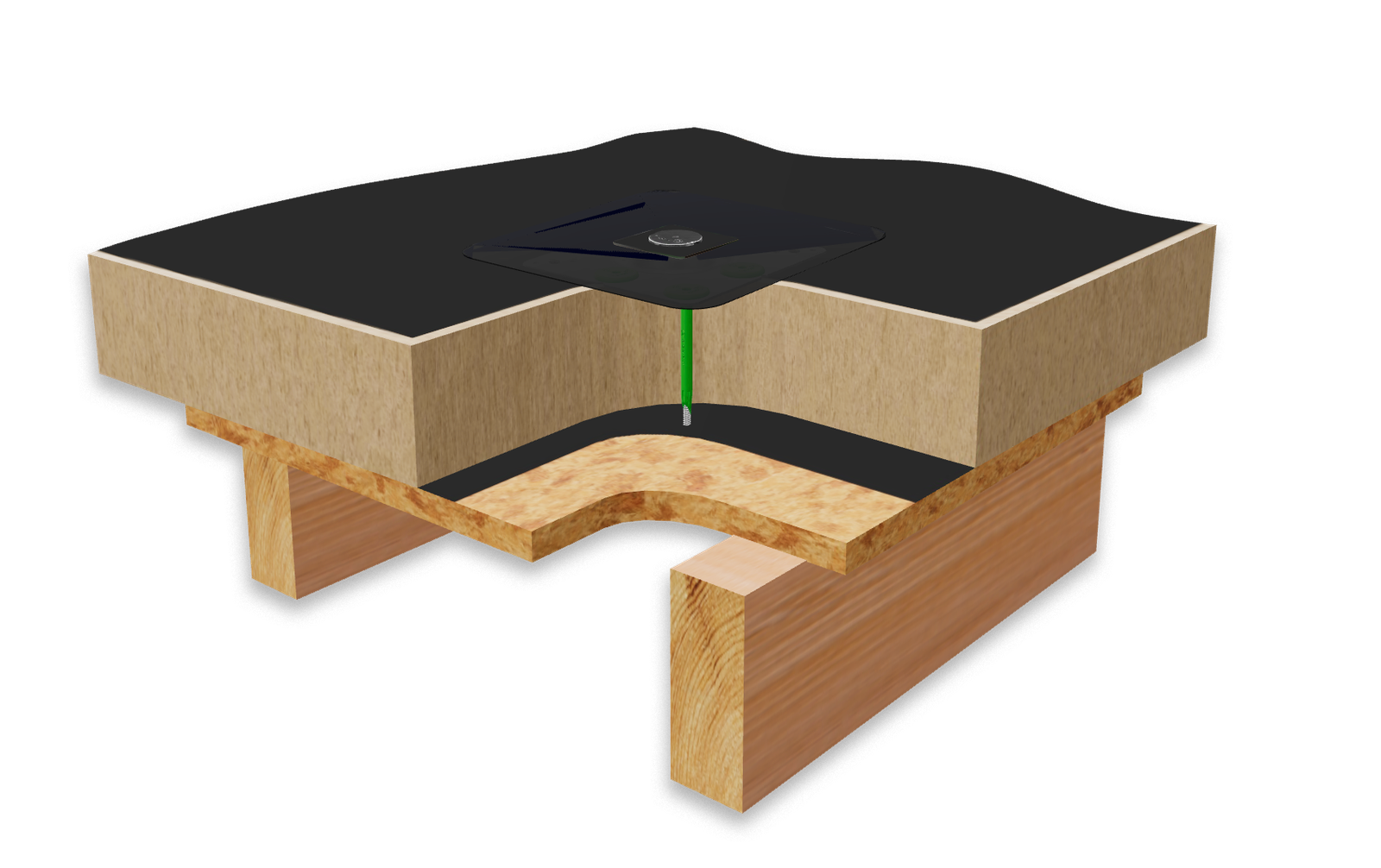
Rather than mounting on top of a finished membrane, the Mark 2 is fixed to the substrate before the roof surface is applied. The roofing material is then laid over the entire deck in a single uninterrupted pass. The anchor bolt emerges through a single clean penetration rather than a patchwork of individually dressed joints.

With conventional anchor systems on new builds, each fixing point requires the membrane to be cut, dressed, and sealed individually. Every joint takes time. Every joint is a potential failure point.

The Mark 2 eliminates that process entirely.

One pass of membrane across the whole deck. Fewer joints. Less labour. Fewer callbacks.

Reducing the number of penetration joints in the finished roof surface directly reduces the statistical risk of water ingress over the life of the installation.

Fewer joints is a better outcome structurally, aesthetically, and practically. The Mark 2 is designed around that logic from the ground up.

Key Features

Factory Pre-Tensioned Assembly

Every Anchor Plate unit is torqued to specification before it leaves the factory. No on-site calibration is required. No torque wrench. No variation between fixing points. Consistent, verified performance across every anchor on every job.

EPDM Rubber Sealing System

Both variants use an EPDM rubber sealing system with a 12-year temperature and performance rating. EPDM is the same sealing technology used across the best flat roofing systems in the UK. It is membrane-compatible, long-lasting, and requires no maintenance over the life of the installation.

304 Grade Stainless Steel Hardware

Bolt, washer, and locking nut in 304 grade stainless steel throughout. No corrosion, no degradation, no maintenance requirement. Engineered to outlast the roof it is fixed into.

Galvanised Mild Steel Base Plate

3mm powder-coated galvanised mild steel, 450x450mm footprint on both variants. The large base plate distributes structural load effectively across the deck surface, reducing point-load stress on the membrane and substrate below.

Universal Membrane Compatibility

Both the Mark 1 and Mark 2 are compatible with the full range of flat roof membrane systems used in UK construction. This includes EPDM rubber, GRP, felt, single-ply, bituminous (SBS and APP), and liquid-applied systems. One product covers every flat roof type you will encounter on site.

Installation Overview

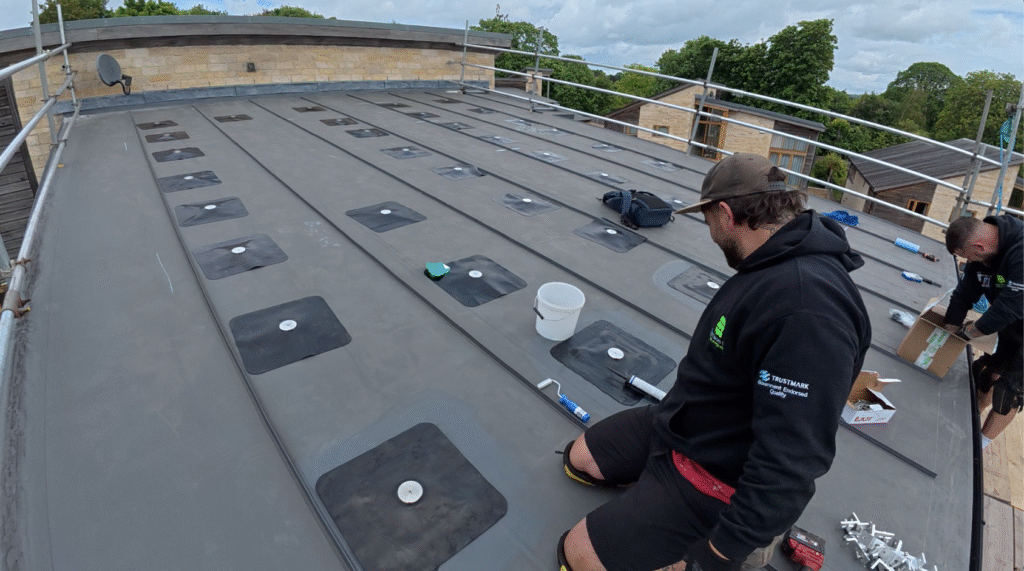
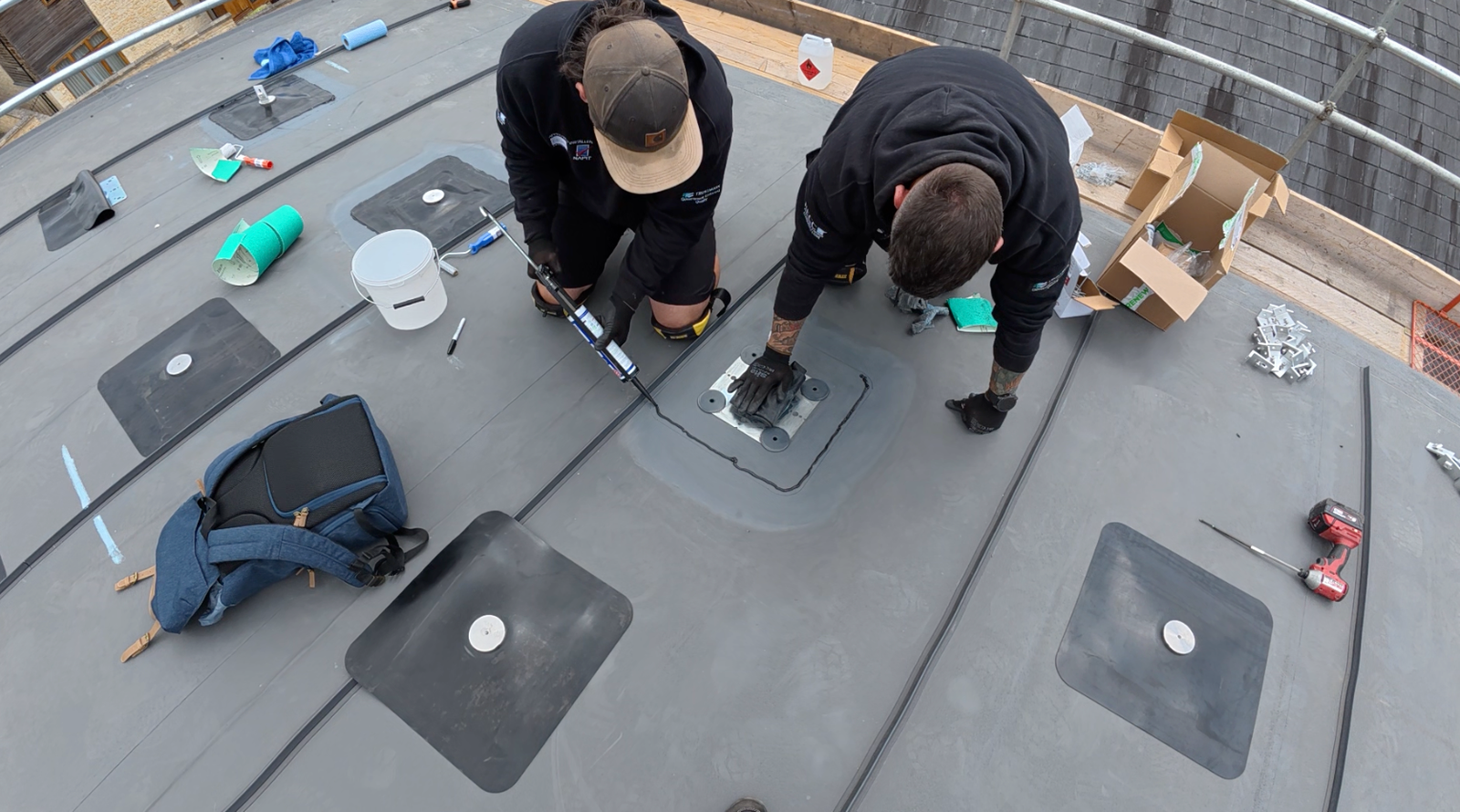
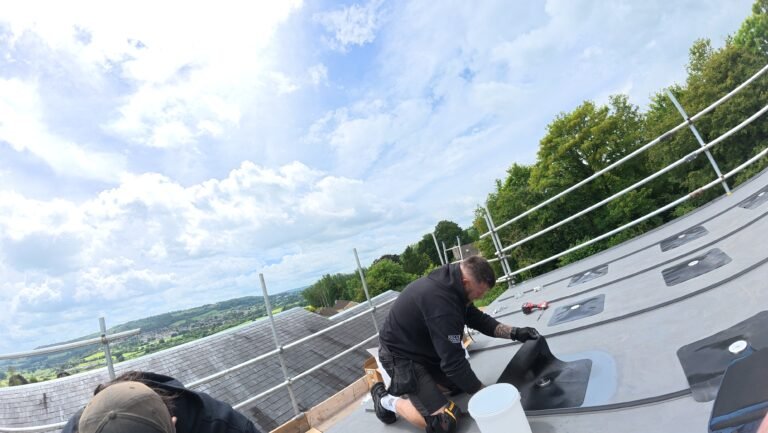
Position the Mark 1 at the required fixing locations on the finished membrane surface.

Fix through the membrane into the substrate using appropriate fasteners and washers. The factory-assembled seal is already in place. No separate sealing step is required.

Suitable for cold and warm roof constructions on plywood and timber deck substrates.

Note: modifications to the factory assembly void the product warranty. Install as supplied.

Fix the Mark 2 to the substrate at the required anchor positions before the roof membrane is applied.

Lay the roofing material across the entire deck in a single continuous pass. The anchor bolt emerges through the membrane at a single clean penetration point with no complex joint dressing required.

Suitable for cold and warm roof constructions on plywood and timber deck substrates, including multi-layer roofing systems.

Note: modifications to the factory assembly void the product warranty. Install as supplied.

Technical Specification

Anchor Plate Mark 1 Anchor Plate Mark 2
Base plate material 3mm powder-coated galvanised mild steel Galvanised mild steel
Base plate dimensions 450 x 450mm 450 x 450mm
Height 45mm 45mm
Weight Approx. 3kg Approx. 3kg
Bolt material 304 grade stainless steel with EDPM seal 304 grade stainless steel
Connector threads 2x M10 x 20mm female 2x M10 x 20mm female
Seal type Prefitted EPDM rubber or custom roof patch No patch required
EPDM rating 12-year temperature and performance 12-year temperature and performance
Assembly Factory pre-tensioned Factory pre-tensioned
Installation position Surface-mounted over membrane Sub-membrane
Membrane compatibility EPDM, GRP, felt, single-ply, bituminous (SBS and APP), liquid-applied EPDM, GRP, felt, single-ply, bituminous (SBS and APP), liquid-applied
Service life Lifetime when correctly installed Lifetime when correctly installed

Other Applications

The Anchor Plate range was designed for solar. Its mechanical fixing performance also makes it suitable for roof-mounted plant supports, safety systems, and equipment fixings on flat roofs where a structurally integrated, weatherproof anchor is required.

Photo Gallery

Lorem ipsum dolor sit amet, consectetur adipiscing elit. Ut elit tellus, luctus nec ullamcorper mattis, pulvinar dapibus leo.

ANCHOR PLATE Video

Downloads

Lorem ipsum dolor sit amet, consectetur adipiscing elit. Ut elit tellus,

luctus nec ullamcorper mattis, pulvinar dapibus leo.

Trade Pricing & Availability

Available to trade accounts. Contact the team for volume pricing, project-specific wind load calculations, product samples, or technical support.

Frequently Asked Questions

What is the best way to mount solar panels on a flat roof?

For existing flat roofs, a surface-mounted mechanical fixing like the Anchor Plate Mark 1 provides a weatherproof, structurally sound anchor point without compromising the roof membrane. For new builds, the Anchor Plate Mark 2 integrates beneath the membrane during construction, reducing joints and improving long-term watertightness.

Yes. Both the Anchor Plate Mark 1 and Mark 2 are suitable for warm roof constructions on plywood and timber deck substrates. The factory-assembled sealing system maintains thermal and weatherproofing integrity at every fixing point.

Both variants are compatible with EPDM rubber, GRP, felt, single-ply, bituminous (SBS and APP), and liquid-applied membrane systems.

No. Both variants are supplied factory-assembled and pre-tensioned with the sealing system already built in. No on-site sealants, tapes, or torque tools are required.

The Mark 1 is surface-mounted and designed for retrofit and existing roof installations. The Mark 2 is integrated beneath the membrane during construction, enabling single-pass membrane application and reducing the total number of joints in the finished roof. Both use the same core engineering and are compatible with the same range of membrane types.

Both products are designed to last the lifetime of the structure when installed correctly. The EPDM sealing system carries a 12-year temperature and performance rating.

Available to trade accounts. Contact the team for volume pricing, technical support, or product samples.

Let's work together!

    Scroll to Top