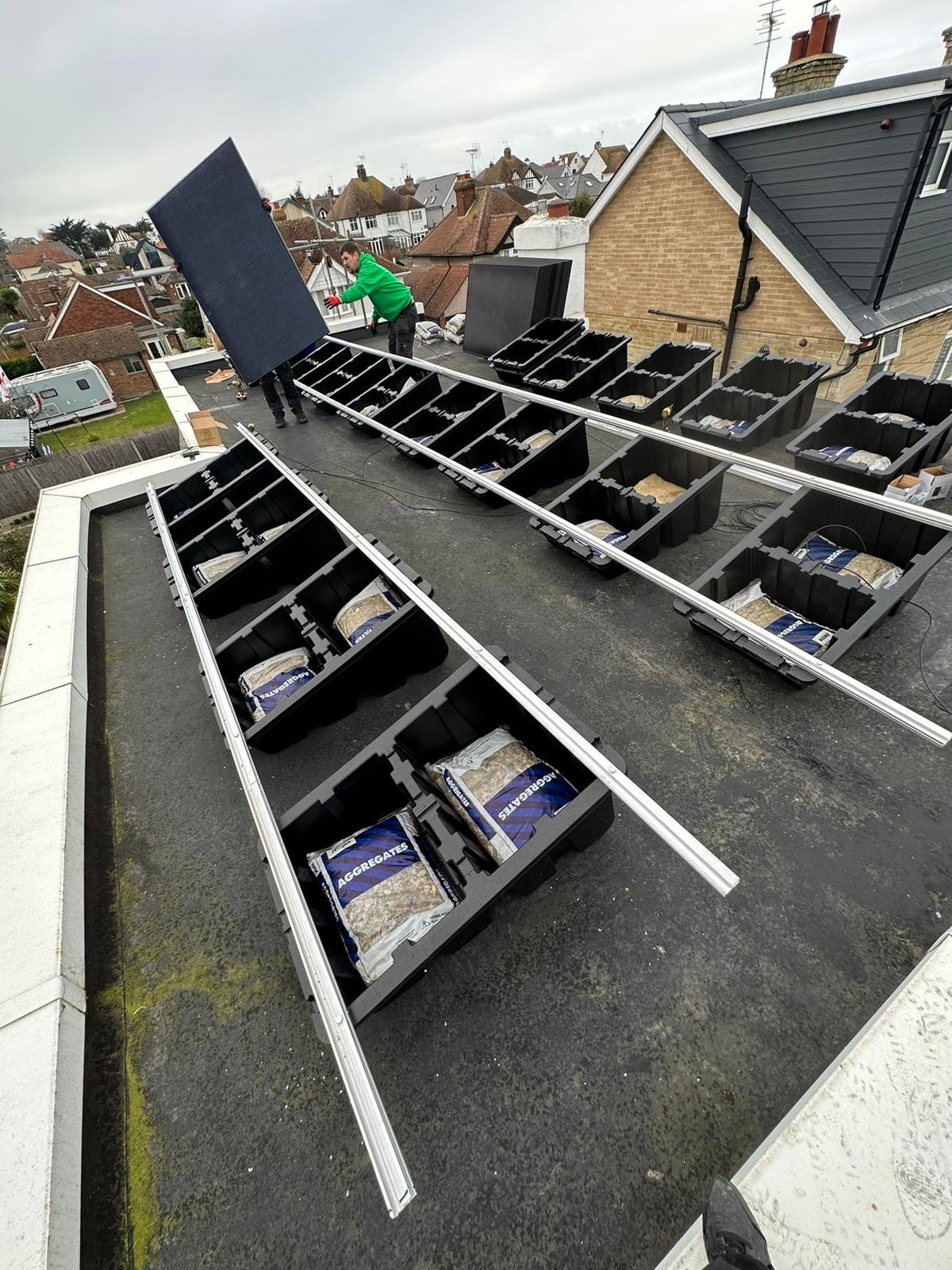
If you already use a rail system on pitched roofs — and you do — FastTub adds one component and opens up flat roof and ground mount installs. No new system to learn. No extra stock to carry. Just simplicity.
One extra component — not a whole new system
If you already install on pitched roofs, you’re already running a rail system. You know mid clamps, end clamps, and joiners. You carry that stock, you know how it goes together.
FastTub slots straight into that. The tub replaces your hanger. That’s it. You’re not learning a new system, you’re not carrying a separate product line, and you’re not adding complexity — you’re adding one component that opens up every flat roof and ground mount job on your books.
From a procurement standpoint, that’s significant. One extra SKU. Not ten.
Surveys are wrong. FastTub is fine with that.
Every installer knows the reality: the survey says three rows, you get on site and there’s an obstacle nobody spotted. The plan says the array goes left — now it needs to go right. A customer changes the row count after you’ve already ordered.
With most console systems, that’s a problem. You’ve got fixed components, fixed positions, and a parts list that no longer matches the job.
Ballast up to 200 kg — and you choose what you use
Wind load is non-negotiable. In high-exposure locations, your ballast requirements go up — and your system needs to handle it without sourcing specialist components.
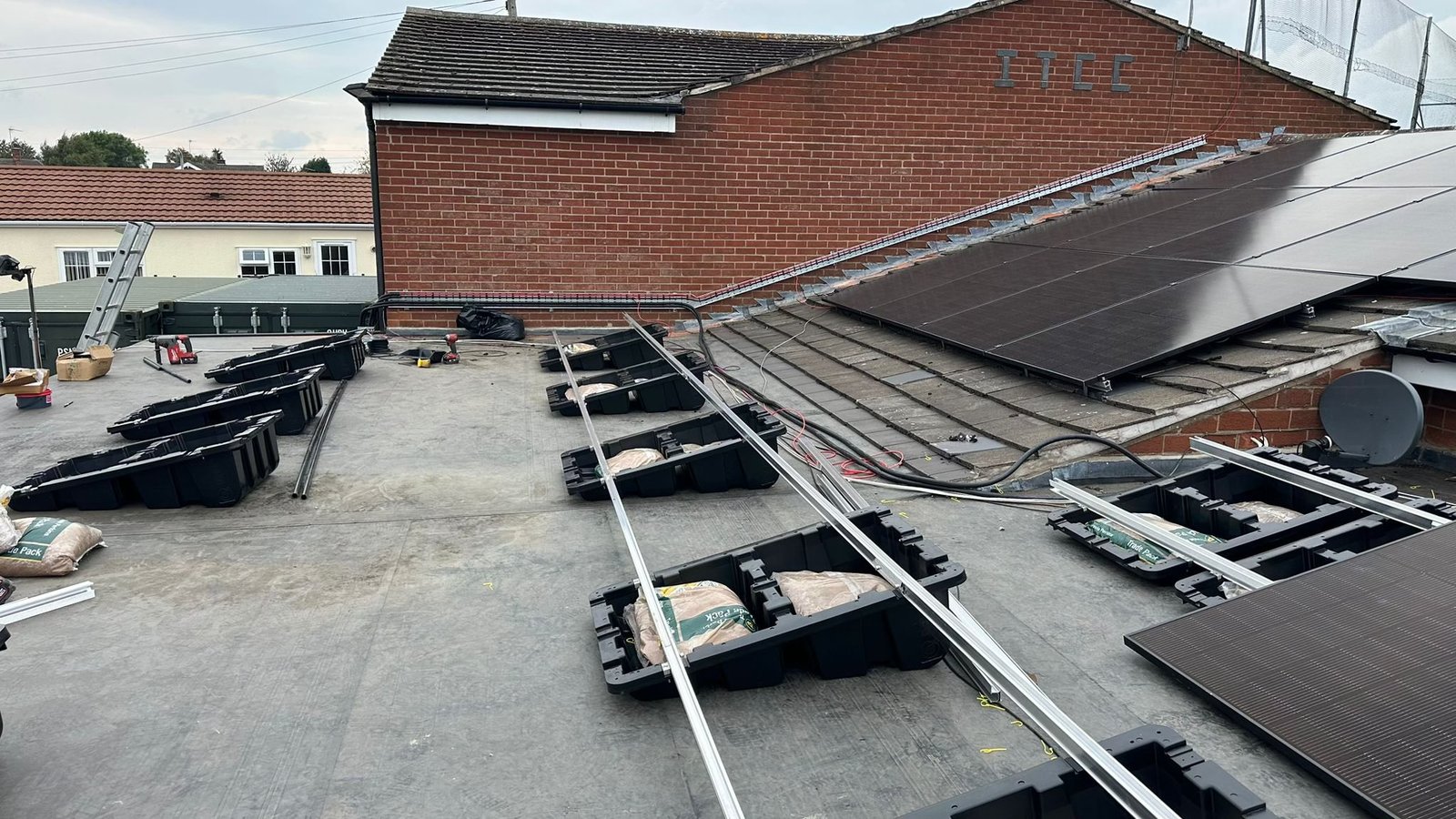
Each FastTub is rated to take up to 200 kg of ballast, which covers the vast majority of domestic and commercial applications. And because of the tub’s open design, you’re not limited to specific paving slabs or proprietary blocks. Use whatever’s available on site — concrete blocks, paving slabs, gravel. The tub holds it, the rail system distributes the load.
That flexibility matters when you’re working on contracts where material procurement is tight or site access makes deliveries difficult.
With FastTub, you just move the tubs. Left, right, fewer rows, more rows — the tub slides along the rail exactly like a hanger would. Nothing is wasted. Nothing needs reordering. The install adapts to the site, not the other way around.
Injection moulded, not vacuum formed
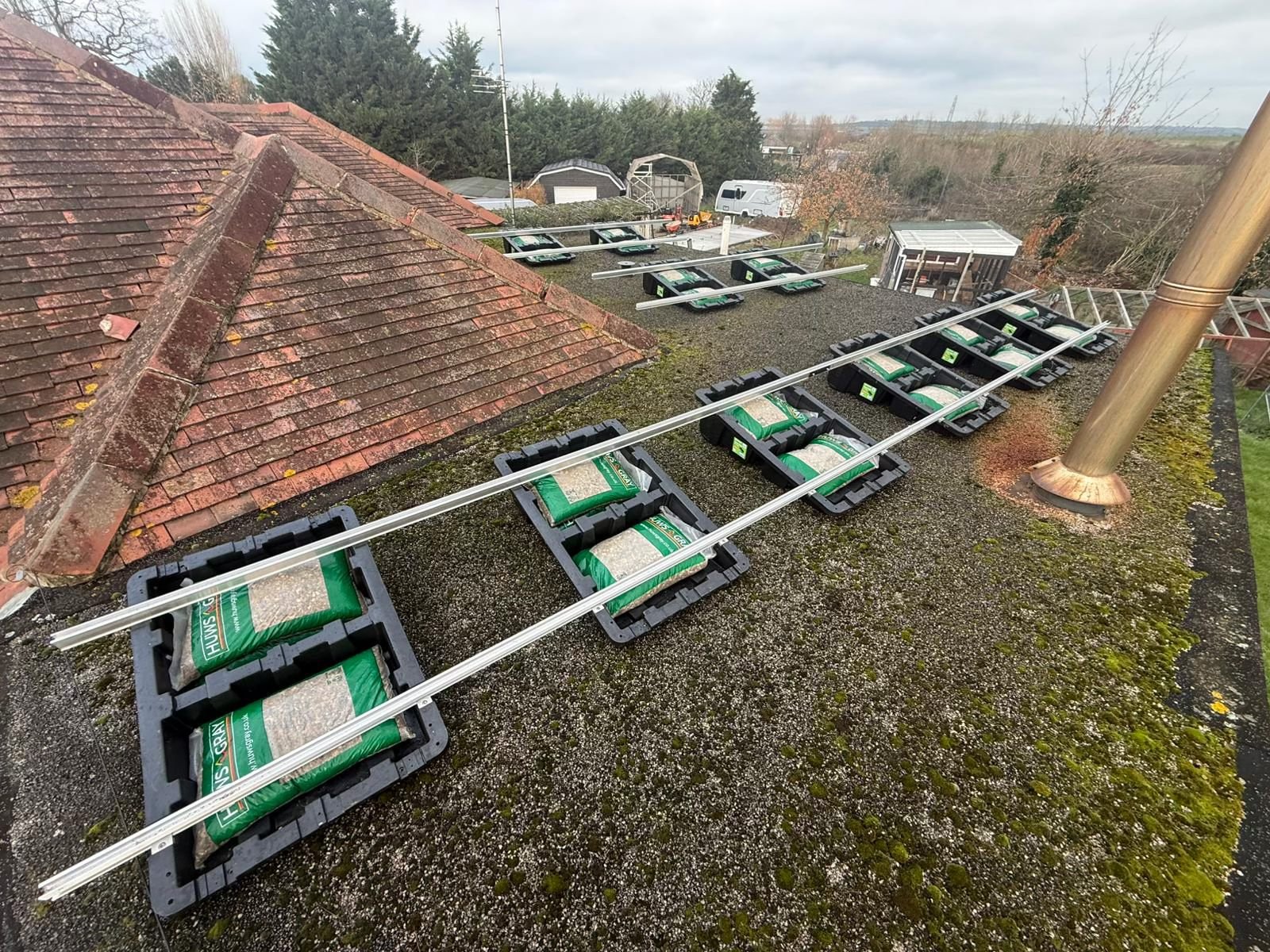
Most console systems on the market are vacuum formed — a process that produces lighter, thinner components that are fine for standard loads but not engineered for serious ballast capacity or long-term structural stress.
FastTub is injection moulded. That means consistent wall thickness, higher structural integrity, and a product genuinely built to take weight. When you’re loading 200 kg into a tub on a commercial roof and walking away for 25 years, you want to know it’s not going anywhere.
How it stacks up
The mono-structure advantage
With a standard console approach, each unit is essentially independent. Structural performance relies on individual units doing their own job. With FastTub connected across a rail system, the entire array becomes one unified structure — load is shared, distributed, and far better managed.
The practical result: you need less ballast overall to achieve the same wind resistance. The rail-to-rail connection is solid, not a weak top-clip like most console systems. And because everything is tied together, the array stays straight, level, and even — which matters both structurally and for how the finished job looks.
Works for domestic and commercial
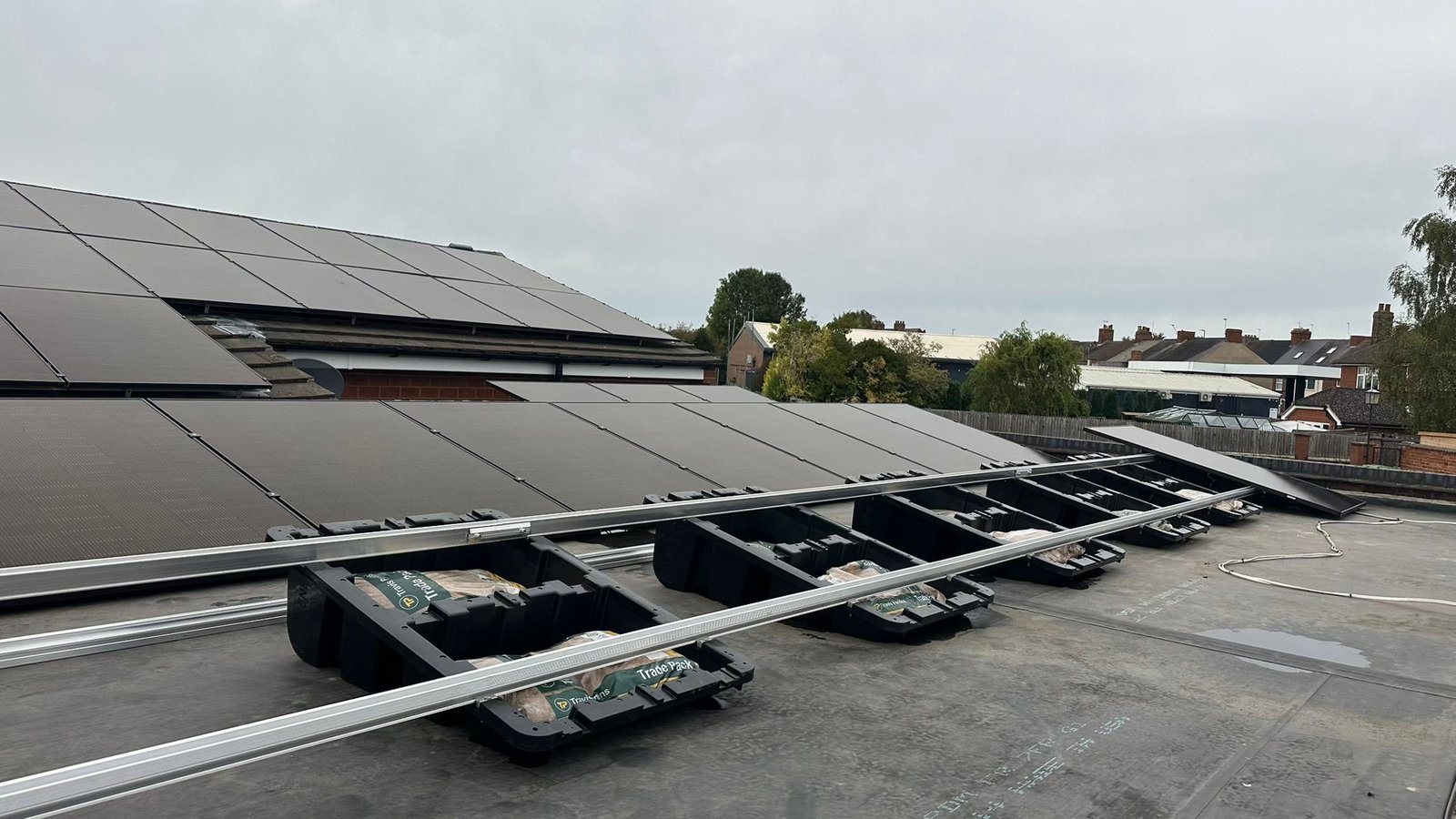
FastTub is equally at home on a small domestic flat roof extension as it is on a large commercial install. Same product, same rail system, same installation logic — just scaled up or down as the job requires. We’ve used it on single-row domestic jobs and large mono-structure commercial contracts alike.
For installers looking to expand into commercial work without retooling their entire van stock, that’s a genuine competitive advantage.